
Sand, sun and UV: caring for gear between trips
How desert sun and sand wear out tents, zips, bags and chairs, what to do in camp to reduce the damage, and a short routine for the day after each trip.
By Outlandia Editors ·
In the UAE, UV, heat and fine sand speed up the wear on camping gear. A tent left pitched in full sun for a long weekend takes a heavy dose of UV, and fine sand gets into every zip, pole joint and hinge. Most of this can be slowed with a few habits in camp and half an hour at home after each trip.
What sun does
Ultraviolet light breaks down the fibres in tent fabric and chair seats. The fabric fades first, then thins, then tears more easily, often along seams and at stake points where it is under tension. Coatings on the fly wear in the same way. Heat adds to it: a closed car or a tent in the midday sun gets very hot, which is hard on glues, seam tape, foam and anything with a battery.
You cannot avoid the sun in the desert, but you can cut the hours your tent spends in it.
- Pitch the tent in the late afternoon if you only need it for the night.
- Take it down in the morning before the sun is high, or open the doors and vents to let heat out.
- In a long camp, think about where the tent stands: the shade of the car or a shelter for part of the day already helps.
Shade for the tent, not only for people
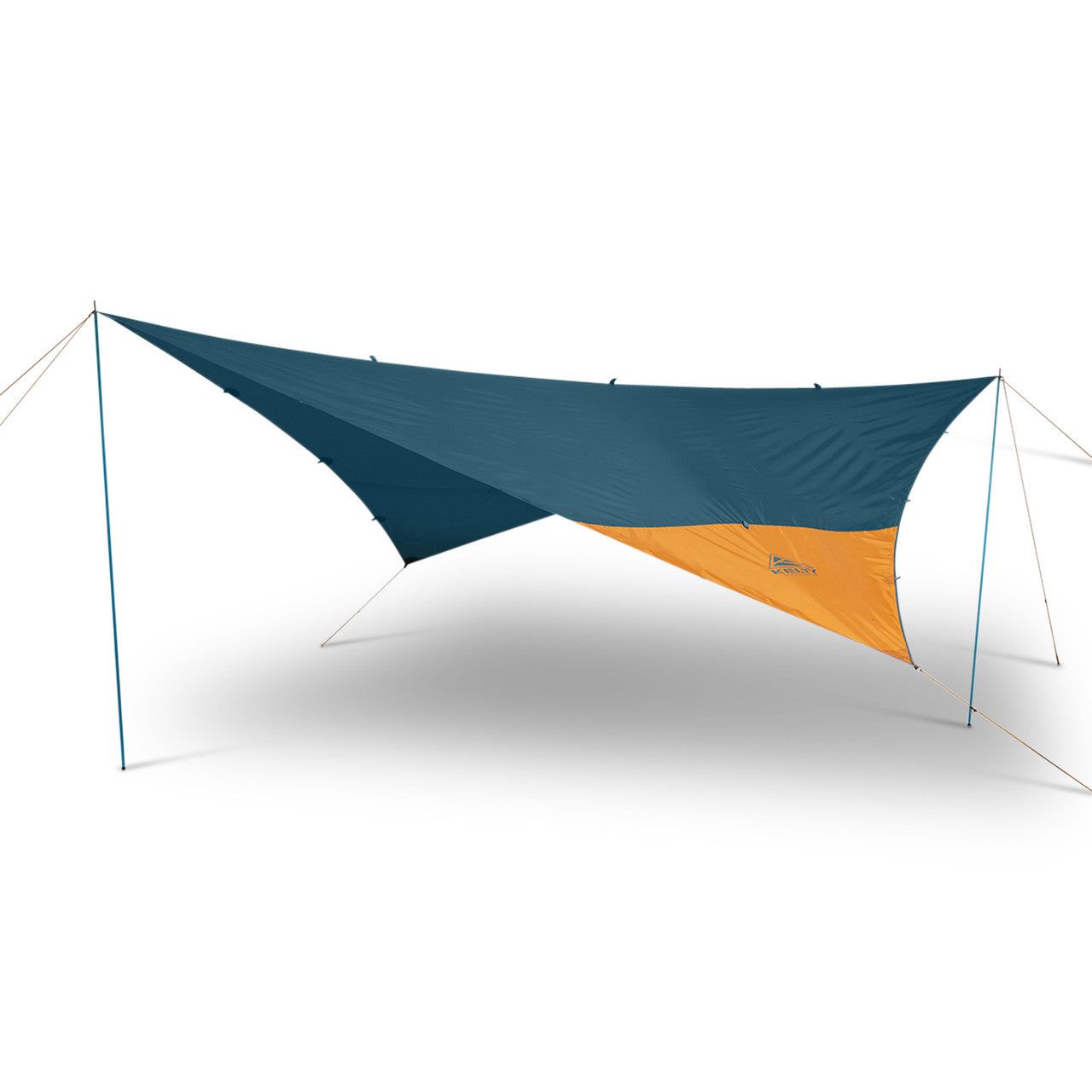
A tarp over the tent takes direct sun off the fly. It is not automatically an improvement: pitched too low or too close, it cuts the airflow around the tent, and it adds one more surface for the wind to catch. Leave a gap between tarp and tent, guy it out well, and take it down if the wind rises. Noah’s Tarp 12 packs into a roll-top carry bag and can be put up over a dining area or another shelter; the poles are sold separately as Staff Poles.
For a quick shaded area, the Sunshade With Side Wall has a tripod frame and a movable wall that you shift as the sun moves. Kelty says the tripod construction “makes windy days a breeze”; that is a reason to choose it for breezy afternoons, not a reason to leave it up in a strong wind.
Gear in this guide
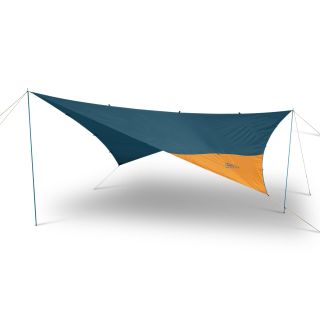 KeltyNoah's Tarp 12fromAED 89.95in stock
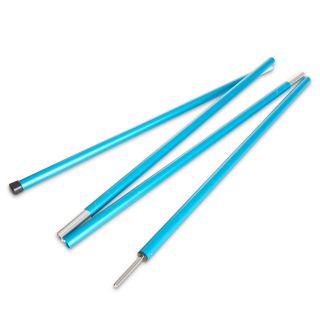 KeltyStaff PolefromAED 59.95low stock
 KeltySunshade With Side Wall — MalachitefromAED 159.95in stock
What sand does
Sand is hard and sharp at a small scale. In a zip, it pushes the teeth apart until the slider no longer closes them. In a pole joint, it stops the sections from seating fully, which leaves a weak point. Under the tent floor, it rubs at the coating every time someone walks inside. In a chair hinge, it grinds the metal each time you fold it.
- Zips: brush sand off the teeth with a soft brush before you close them, and close them slowly. Do not force a stuck zip; clean it first.
- Poles: wipe each section before you join it, and make sure every joint is fully closed before you bend the pole.
- Floor: choose a spot clear of sharp stones and thorns, and keep shoes outside.
- Chairs: shake them upside down before folding.
A footprint under the tent protects the floor from abrasion by sand and rough ground, and it is cheaper to replace than the tent. It does not replace choosing a clean, smooth spot. Kelty makes footprints sized for its tents, for example the Late Start 4P Footprint and the Wireless 4P Footprint.
Gear in this guide
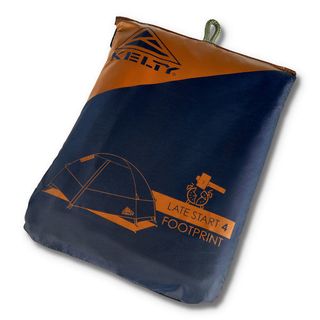 KeltyLate Start 4P FootprintfromAED 44.95in stock
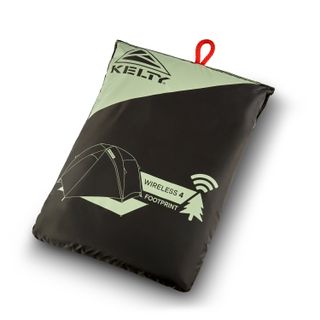 KeltyWireless 4P FootprintfromAED 39.95low stock
The day after a trip
- Pitch the tent in the shade at home, or hang it up. Shake it out, open all doors and turn it upside down to empty the sand.
- Brush sand out of zips. Rinse them with fresh water only if the care instructions for your tent allow it, then let them dry open.
- Wipe poles with a damp cloth, dry them and check each joint for cracks.
- Let the tent, fly and footprint dry completely before packing. Damp gear packed away can grow mould.
- Air sleeping bags in the shade with good ventilation. Kelty’s advice is to store a bag only when it is fully dry. Wash only when needed and follow the label.
- Dry self-inflating pads with the valve open and keep them out of long sun, as Kelty recommends.
- Rinse chairs with fresh water if you were near the sea, then dry them.
- Rinse out the rubbish carrier: the Trash Pak is built to withstand sun, rain and wind on the car, and Kelty’s advice is simply to rinse it out at home.