
Night safety at a group camp: light, guylines and layout
How to set up a group camp so 10 to 30 people move safely after dark: zones and access routes, visible guylines, where to put light, and night rules.
By Outlandia Editors ·
In winter the sun sets early, and a group camp spends more hours in the dark than in daylight. Many small accidents at camp happen then: someone trips over a guyline, walks into a stake, steps too close to the fire or loses the way back from the toilet area. Light helps, but layout and visibility do more. This guide covers all three, in the order to plan them.
Layout first
A camp that is easy to walk through in daylight is easy in the dark. Plan it before the first tent goes up.
- Zones: sleeping, kitchen and fire, vehicles, toilet area, each in its own part of the site.
- Fire: at least 9 metres from tents and anything flammable, as Abu Dhabi Civil Defence advises, and placed so the wind carries smoke and sparks away from the sleeping area. Not in a windy, dry spot.
- Vehicles: parked on the outer edge, not between tents. Tents never go where cars turn or reverse.
- Emergency access: one route from the track into the camp kept clear all night, wide enough for a vehicle, with nothing pitched or parked across it.
- Assembly point: one place everyone knows, on the edge of camp and on the access route.
- Main path: one route that links all zones, kept free of guylines, chairs and bags. Everyone uses it after dark.
- Toilet area: on the edge, reached by the main path, and marked so it can be found and returned from.
Guylines and stakes: make them visible
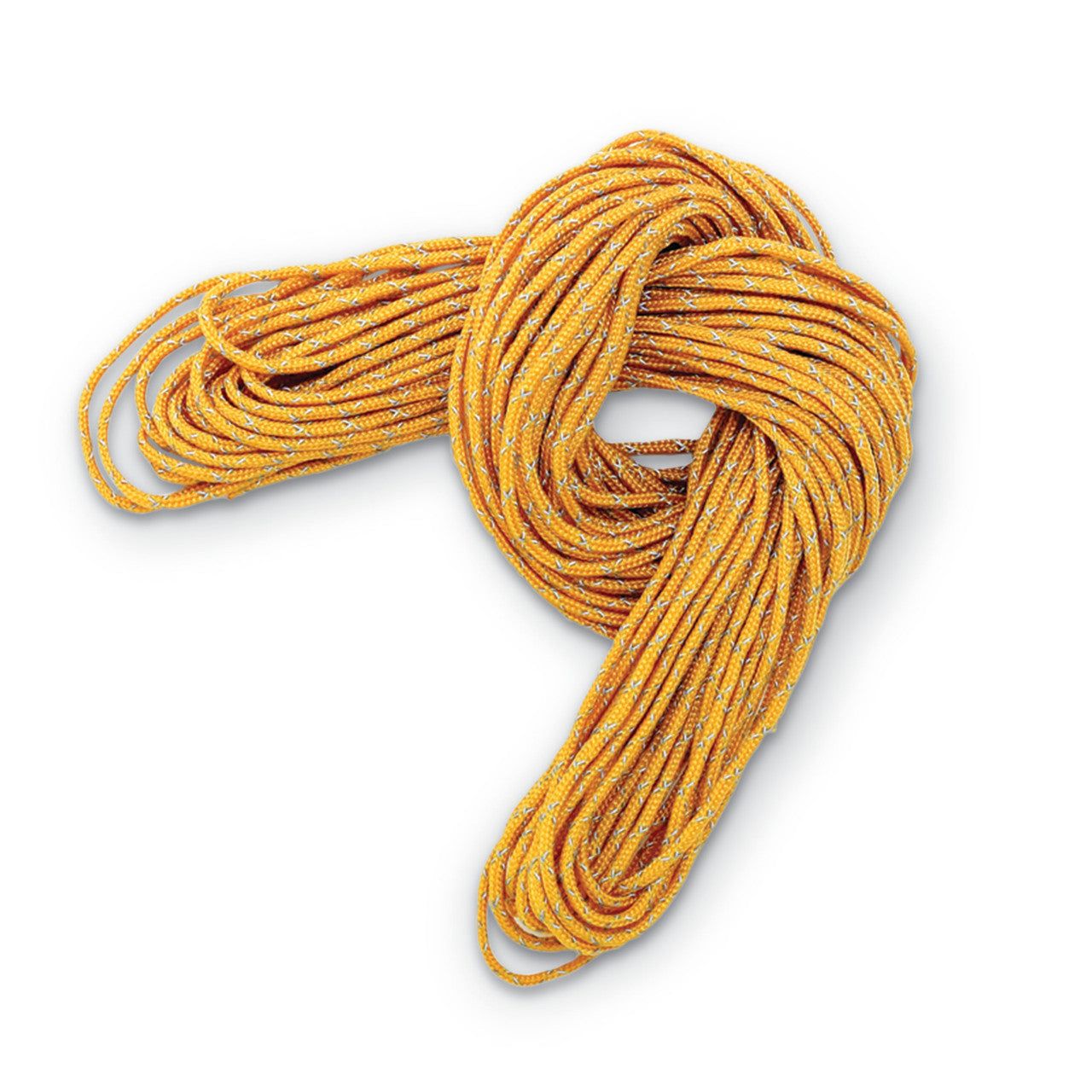
In a group camp there are dozens of guylines, and thin dark cord disappears at night. Reflective cord shows up when a torch or headlamp beam reaches it; without a light on it, it is as dark as any other cord. The Triptease Lightline is about 15 m of gold reflective nylon around a Dyneema core, made for staking or guying out a tent. Use it where it counts most: on guylines next to paths, at entrances and where people cross between tents.
Stakes are the second hazard. Drive them fully in and angle them away from the tent so nothing sticks up. NoBendium II stakes are hexagonal high-strength aluminium with a long tapered point, which makes them easier to drive fully into hard ground. On loose sand, where stakes slip, a Sand Bag Stake filled with about 9 kg of sand holds the line with no metal point sticking up.
Visible guylines and anchors
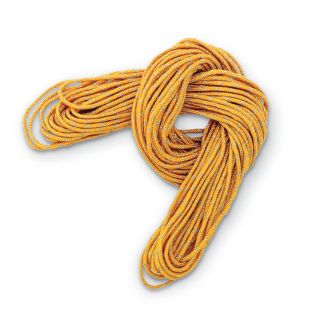 KeltyTriptease LightlinefromAED 24.95in stock
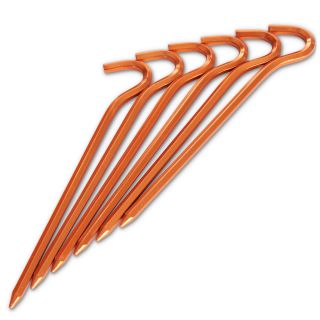 KeltyNoBendium II Stake (6 Pack)fromAED 19.95in stock
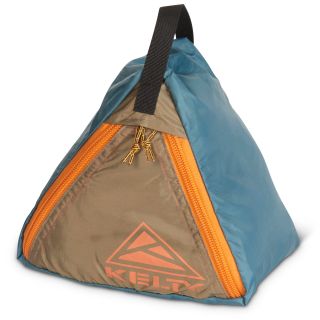 KeltySand Bag StakefromAED 19.95low stock
Light: where it goes
Our catalog does not include lanterns or headlamps, so this section is general advice. Think in three layers.
- Personal: every participant carries a headlamp with spare batteries or a charged power bank. Put it on the kit list and check it at the briefing.
- Area: one or two lanterns over the kitchen and common area, hung high so they light the ground without shining in people’s eyes. Warm or red light keeps night vision.
- Markers: small low lights or reflective markers at the start of the main path, the toilet area, the assembly point and the edge of the vehicle zone. They are for finding your way, not for seeing.
Avoid floodlighting the whole camp. Bright light makes everything outside it darker and spoils the night sky people came for. Agree on a lights-down time and keep headlights off unless a car is moving.
Find things without lighting up the camp
A lot of night-time walking is people looking for something in a car. Pack so that things are found by headlamp in seconds. The Car-Go-Box sorts gear into three colour-coded pods in a structured folding case, so you can tell the right pod at a glance. The Window Seat has a clear top: shine a light on it and you see what is inside. Put the night essentials, such as the first-aid kit, spare batteries, warm layers and the toilet kit, in one of them and tell the group where it is.
Gear in this guide
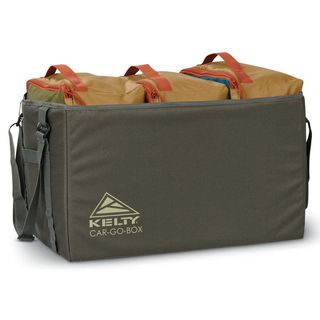 KeltyCar-Go-BoxfromAED 114.95in stock
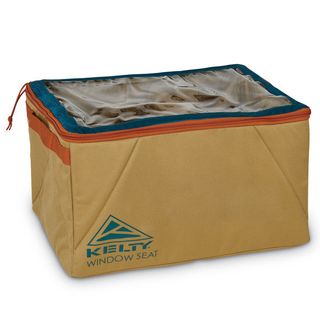 KeltyWindow SeatfromAED 59.95in stock
Night rules for the group
- No vehicle moves inside the camp after the agreed hour, except in an emergency.
- Anyone leaving the camp area after dark takes a headlamp and tells the person on duty where they are going.
- Use the main path, not shortcuts between tents.
- Headlamps on low and pointed down when talking to someone.
- Fire attended at all times and fully put out before the last person goes to sleep.
- Everyone knows the assembly point, the access route, and where the first-aid kit and the leader’s tent are. In an emergency, call 999.