
Sleeping next to your 4x4: awnings, shelters and car-side tents compared
Five ways to turn a 4x4 into a desert camp, from a quick awning to a tent on the tailgate, and which suits a night out, a club weekend or a long crossing.
By Outlandia Editors ·
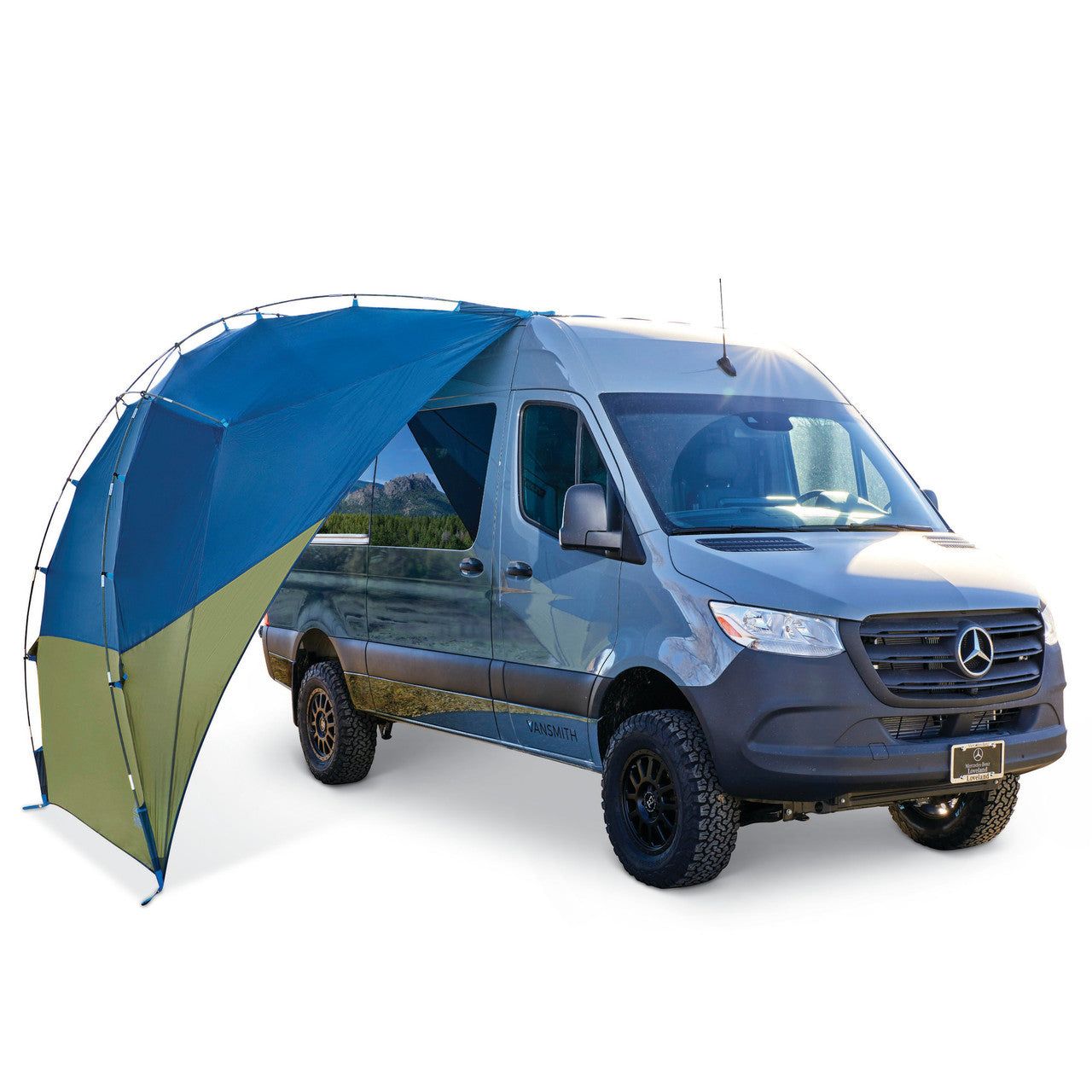
On a 4x4 trip the car is already half your camp: it carries the water, breaks some of the wind and holds the kitchen. What it needs is a roof beside it. Kelty makes several shelters that attach to a vehicle without a permanent mount, and they solve different problems. Here is how they compare, where each one fits, and how to keep them on the ground when the wind picks up.
Three vehicle shelters
Quick shade for a day stop: Sideroads Awning
The Sideroads Awning goes up on the rear or the side of the vehicle and is built for an easy set-up. Kelty lists a 68D polyester tarp and fibreglass poles. It is shade for lunch, a rest between dune runs or a place to sit after the drive. It is a roof without walls, so it suits daytime and calm evenings better than a windy night.
A room off the side: Backroads Shelter
The Backroads Shelter also mounts to the rear or the side, and adds side panels that roll down. Down, they block sand and low sun and give privacy; rolled up, they let the breeze through. Kelty lists the same 68D polyester and fibreglass poles as the Sideroads. It suits a group that wants a common space next to the car for the evening.
Heavier build: Highroads Shelter
The Highroads Shelter has a denser fabric and aluminium poles, according to Kelty: a 210D polyester oxford tarp, against 68D on the other two. It deploys from the rear or the side of tall or small vehicles with what Kelty calls a universal attachment system. Check the fitting against your own roof rack or rail before the trip. For a club that camps most weekends, or a multi-day trip where the shelter goes up and down every day in sand, the heavier build is the reason to choose it.
Vehicle shelters
 KeltySideroads AwningfromAED 134.95in stock
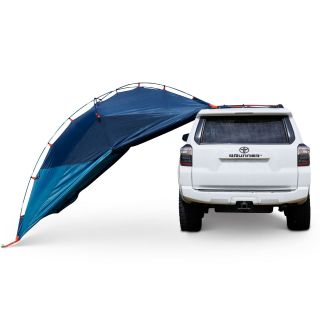 KeltyBackroads ShelterfromAED 179.95in stock
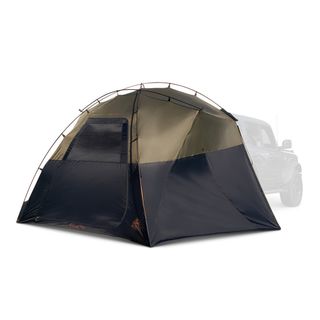 KeltyHighroads ShelterfromAED 284.95in stock
For the night
A tarp you can leave up overnight: Waypoint Tarp
The Waypoint Tarp attaches to most vehicles without a permanent mount, according to Kelty, and extends from them on a single sturdy pole. Kelty says it gives more weather protection than a traditional awning and is designed so you can leave it up overnight. If your group sleeps in roof tents or in the car, it covers the space where you cook, eat and sit.
Tent and car in one: Caboose
The Caboose 4P Tent is a free-standing tent with an extended awning that attaches to the open tailgate or hatch. The car becomes an extra room: bags, cool box and warm layers are within reach at night. Unhooked, the awning becomes a large vestibule, so you can drive off for the day and leave the tent standing. Protect its floor with the Caboose 4P Footprint.
Gear in this guide
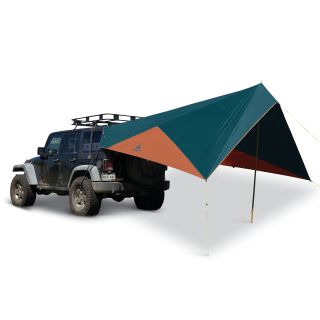 KeltyWaypoint Tarp — Reflecting PondfromAED 149.95Out of stock
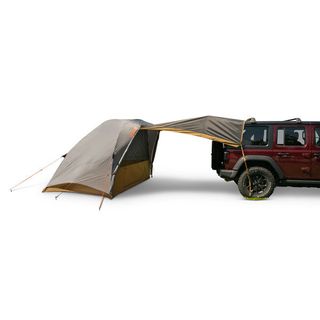 KeltyCaboose 4P TentfromAED 349.95low stock
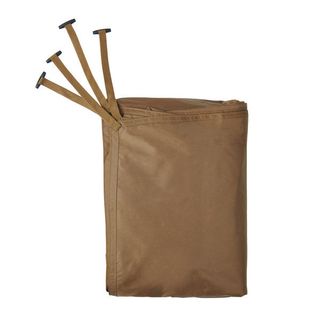 KeltyCaboose 4P FootprintfromAED 39.95low stock
Which one for which trip
- Day trip and dune runs: Sideroads Awning.
- One or two nights with friends who sleep in tents: Backroads Shelter for the common area.
- Club weekends and multi-day crossings: Highroads Shelter, or the Waypoint Tarp if you sleep in a roof tent.
- A family or couple who sleep next to the car: Caboose.
Around the shelter: kitchen and order
A vehicle camp works when everything has a place. The Camp Galley Deluxe hangs from the roof rack with pockets for spices, tools and plates; the Chef Roll does the same for utensils in a smaller roll. The Car-Go-Box sorts gear into three colour-coded pods, so you unload only what you need. The Trash Pak mounts outside the car and holds a weekend of rubbish, so nothing is left in the desert. For longer trips, the Discovery H2Go is a free-standing shower and privacy shelter with steel poles and a floor with a drain hole.
For the vehicle camp
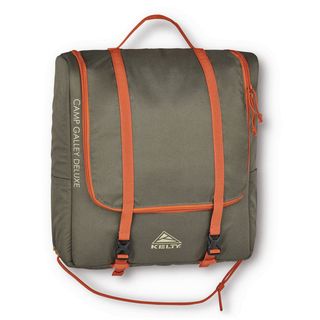 KeltyCamp Galley DeluxefromAED 79.95in stock
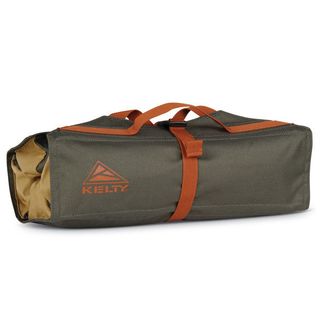 KeltyChef RollfromAED 44.95in stock
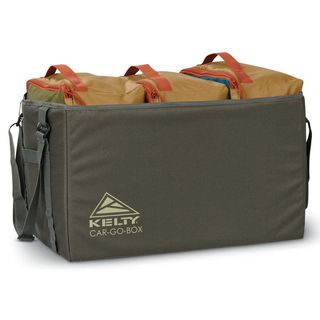 KeltyCar-Go-BoxfromAED 114.95in stock
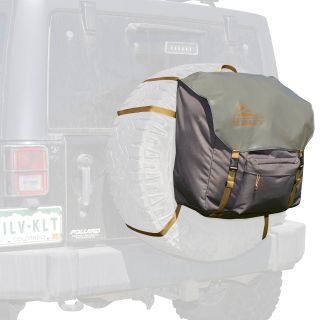
- −25%
KeltyTrash PakfromAED 97.46AED 129.95in stock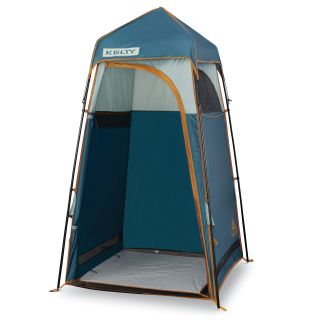 KeltyDiscovery H2Go — Iceberg GreenfromAED 134.95in stock
Wind and anchoring
An awning or shelter fixed to a car catches a lot of wind, and with the side panels down it catches more. Plan for that before you pitch.
- Park so the shelter sits on the downwind side of the vehicle, with the car between it and the wind.
- Use every anchor point and guyline the shelter has, not just the corners.
- Check the forecast and watch the sky. When the wind rises, roll up the side panels first, then lower or take the shelter down before it starts to lift.
- Do not leave a vehicle shelter up while the camp is empty unless the product is designed for it, and even then only in settled weather.
For anchors, Kelty describes the Sand Bag Stake as an alternative where the ground is too hard to stake: you fill the triangle with about 9 kg of sand or rocks. On loose sand, where ordinary stakes slip, the same weighted bag gives a guyline something to pull against. It is not a universal anchor. In strong wind, add more lines and more weight, and take the shelter down rather than relying on any single anchor.
Gear in this guide
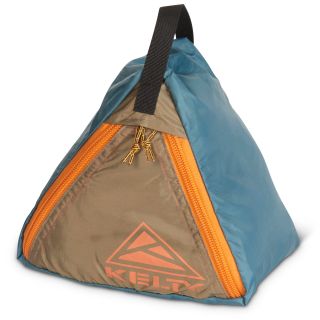 KeltySand Bag StakefromAED 19.95low stock
Before the first trip
- Pitch the shelter once at home, on your own car, and time it.
- Check how it attaches to your roof rack or rails, and that the doors and tailgate still open.
- Count stakes, guylines and sand bags, and pack them with the shelter, not separately.
- Agree in the group who takes the shelters down when the wind turns, so nobody waits for someone else.