
Pitching a tent on sand: stakes, guylines and wind
Deadman anchors, sand bag stakes, longer guylines and a pitching order that works in wind: practical technique for tents on UAE desert sand.
By Outlandia Editors ·
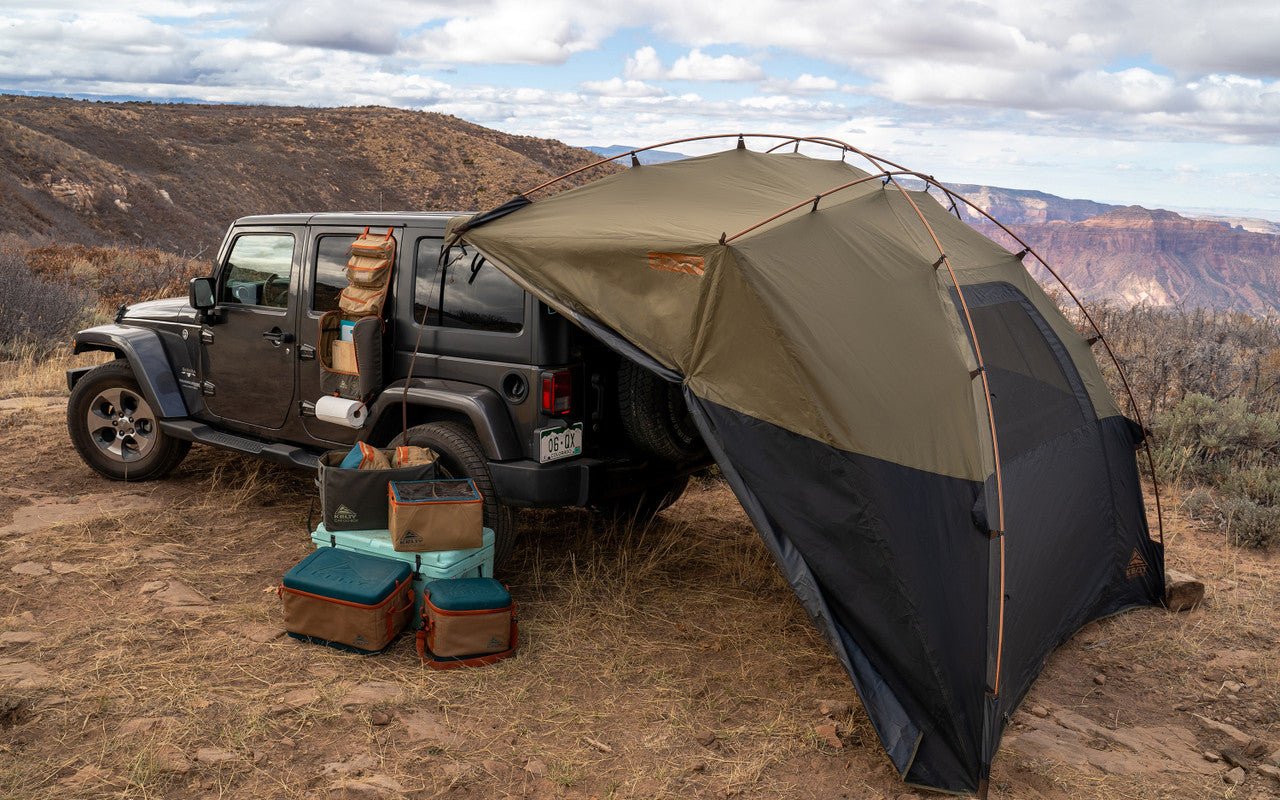
You know how to pitch a tent. On UAE sand the basic moves still apply, but almost every anchor you rely on at home behaves differently. A standard tent peg driven vertically into loose, dry sand offers very little holding power. This guide is the technique we use for a tent that stays up through an evening wind: how to anchor, how to rig guylines, in what order to pitch and how to check it at night. If you have not read it yet, the short version of why the desert is different is in camping in the UAE when you have camped elsewhere.
Why pegs fail in sand
Dry sand has almost no cohesion, so a thin vertical peg levers out. What holds is surface area and depth: anything wide, buried and loaded across its broad side.
The surface also changes within a few metres. Wind-blown sand on a dune is soft and deep; the flat between dunes is often firmer, with gravel or a crust under a thin layer. Probe with a peg before you choose the exact spot: a firm flat is easier to anchor than a pretty dune top. The gentle slope of a dune usually faces the prevailing wind, but local wind shifts, so use it as a hint about direction, not a guarantee.
Anchors that hold
- Deadman anchor: tie the guyline around the middle of a peg, stick or stuff sack, lay it horizontally in a trench about 30 cm deep, at right angles to the line, and backfill. Stamp the sand down. The load now pulls against a whole column of sand instead of a point.
- Sand bag anchor: the Sand Bag Stake is a triangular bag that Kelty says you fill with about 9 kg of weight, such as sand or rocks, and tie your guyline to. Bury it as a deadman for the main windward points, or leave it on the surface for lighter loads.
- Firm ground and gravel: hexagonal NoBendium II stakes in high-strength aluminium have a long tapered point and go into compacted ground that bends thin wire pegs. On bare rock no stake goes in; use weighted bags, or tie off to large rocks that will not move. Small loose stones roll in the first gust.
- Steel stakes: the Basecamp Stake is a strong, simple steel stake, worth carrying in the car for mixed ground and for driving in at an angle where sand sits over a firmer layer.
Damp sand holds better than dry. If you genuinely have water to spare, a little poured into the trench before you backfill firms up a deadman until the sand dries. It is optional: in the desert drinking water comes first, and a well-buried anchor holds without it.
Anchors for sand and gravel
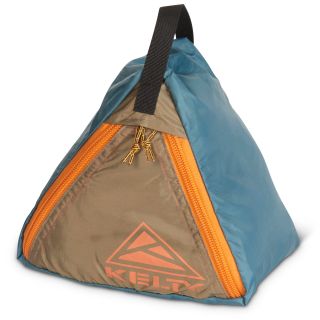 KeltySand Bag StakefromAED 19.95low stock
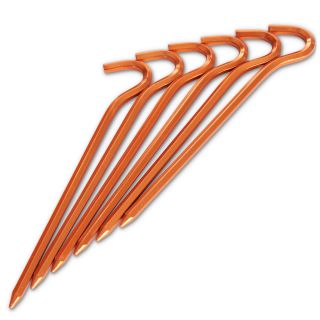 KeltyNoBendium II Stake (6 Pack)fromAED 19.95in stock
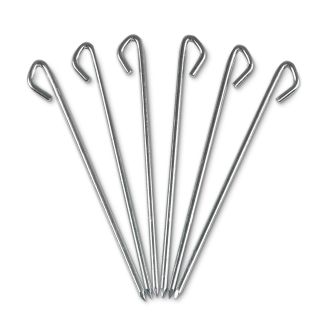 KeltyBasecamp Stake (6 Pack)fromAED 24.95in stock
Guylines: longer and lower
Standard guylines are cut for forest ground, where the peg goes in close to the tent. In sand you want a lower angle: a longer line, anchored further out, pulls the tent down and sideways rather than straight out, and the buried anchor takes the load across its broad side. We carry spare cord to extend every windward line.
The Triptease Lightline is about 15 m of cord with a Dyneema core, enough to extend several guylines. Its reflective gold sheath shows up in a headlamp beam, which matters in a desert camp where people walk between cars and tents in total darkness.
Gear in this guide
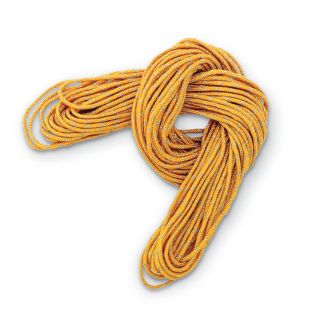 KeltyTriptease LightlinefromAED 24.95in stock
Pitching order in wind
- Read the manufacturer’s pitching instructions first; the steps below adapt them to wind, they do not replace them.
- Lay the tent out with the narrow, low end facing the wind, and put the footprint under it. Kelty footprints are cut smaller than the tent floor, so no edge sticks out to collect water or catch the wind.
- Anchor the two windward corners first, before any pole goes in. A tent raised before its windward anchors are secured can catch the wind like a sail.
- Insert the poles and raise the tent, then anchor the leeward corners.
- Attach the fly and rig the windward guylines before the leeward ones.
- Tension evenly and do not overtighten. One overtight line pulls the frame out of shape and loads one anchor with the whole tent.
If the gusts are already strong enough to be dangerous, do not pitch at all. More anchors do not make a tent safe in that wind; waiting, or sleeping in the car, does.
Tents with guylines already attached save time at exactly the moment the wind picks up. The Tanglewood 2 and the free-standing Ashcroft 3 both have pre-attached guylines for windy conditions. For a family camp, the Wireless 4P sets its shape quickly with Quick Corners, and its own Wireless 4P Footprint clips to the same corners, so it does not lift in a gust.
Tents and footprint for wind
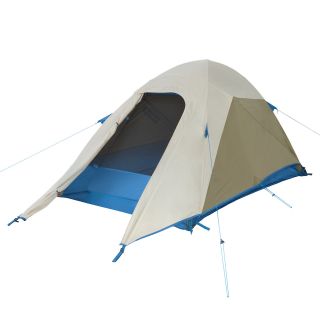 KeltyTanglewood 2P TentfromAED 89.95low stock
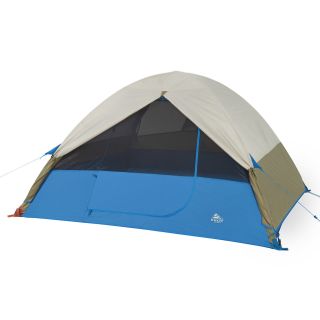 KeltyAshcroft 3P TentfromAED 149.95low stock
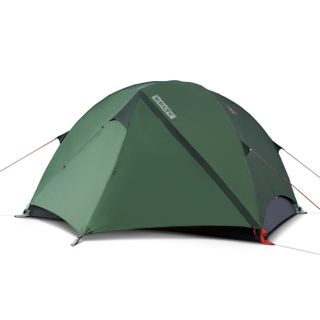 KeltyWireless 4P TentfromAED 189.95in stock
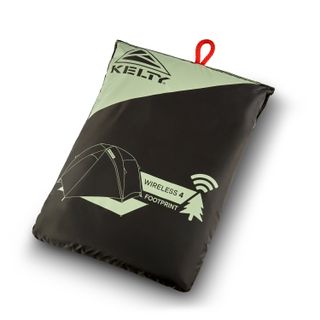 KeltyWireless 4P FootprintfromAED 39.95low stock
During the night
Sand settles and creeps as the wind blows across it, and lines that were tight at 7 pm are often slack by midnight. Check them before you sleep and once if you wake up. A fly that flaps usually means a slack line on that side; tension it rather than piling sand on the fabric, and keep sand off the mesh vents. Close the tent bags and zip pockets: fine sand ends up in zip sliders, and that is how zips fail on a desert trip.
Know when to stop. If the poles start to bend hard in the gusts, do not add anchors: take the tent down, or drop it flat and weigh it down, and sleep in the car. A tent can be pitched again in the morning; a broken pole far from a shop cannot be fixed in the dark.
Short checklist for sand
- Two kinds of anchor: sand bags or deadman material for sand, strong stakes for gravel.
- Spare cord to make windward guylines longer.
- A small folding shovel to dig deadman trenches and to dig out the car.
- A footprint matched to the tent.
- A brush or cloth to clean sand off zips before you pack.
- For shade on the same trip, see tarps and shelters for the UAE sun.