
Why tents collapse in desert wind, and what to choose instead
The four ways a tent fails in desert wind: poles, fabric, stakes and guylines. What to look for in a replacement and how to pitch so it stays up.
By Outlandia Editors ·
Tents rarely fail in the desert on a calm night. They fail when the wind rises after dark, the sand starts to move, and a gust hits the tent from the side. If your tent folded last season, look at four things: the poles, the fabric, the stakes and the guylines. Knowing which one gave way tells you what to look for in the next tent, and how to pitch it.
How a tent fails in the wind
- Poles: a gust bends a pole further than it can take. The section cracks, splinters or kinks; the tent leans and then folds.
- Fabric: the rainfly catches the wind like a sail. Fabric weakened by sun tears at the seams or at the points where it is staked out.
- Stakes: in loose sand a normal stake holds very little. When one corner lifts, the wind gets under the floor and the others follow.
- Guylines: many tents come with guylines that were never tied out. Without them, the poles carry the whole load.
Often two of these happen together. A stake pulls out, the fly starts to flap, and the flapping puts a load on the poles they were not built for. So a better tent is only half of the answer; the other half is how you anchor it.
Poles: read what the description says
Pole material is one of the things to check in a replacement, alongside the fly, the shape and the anchoring. Both fibreglass and aluminium can break in a strong gust. Fibreglass tends to crack or splinter, and a split section is hard to fix in the field. Aluminium tends to bend before it breaks, so it fails more predictably, and a bent section can often be splinted with a repair sleeve and tape until you get home.
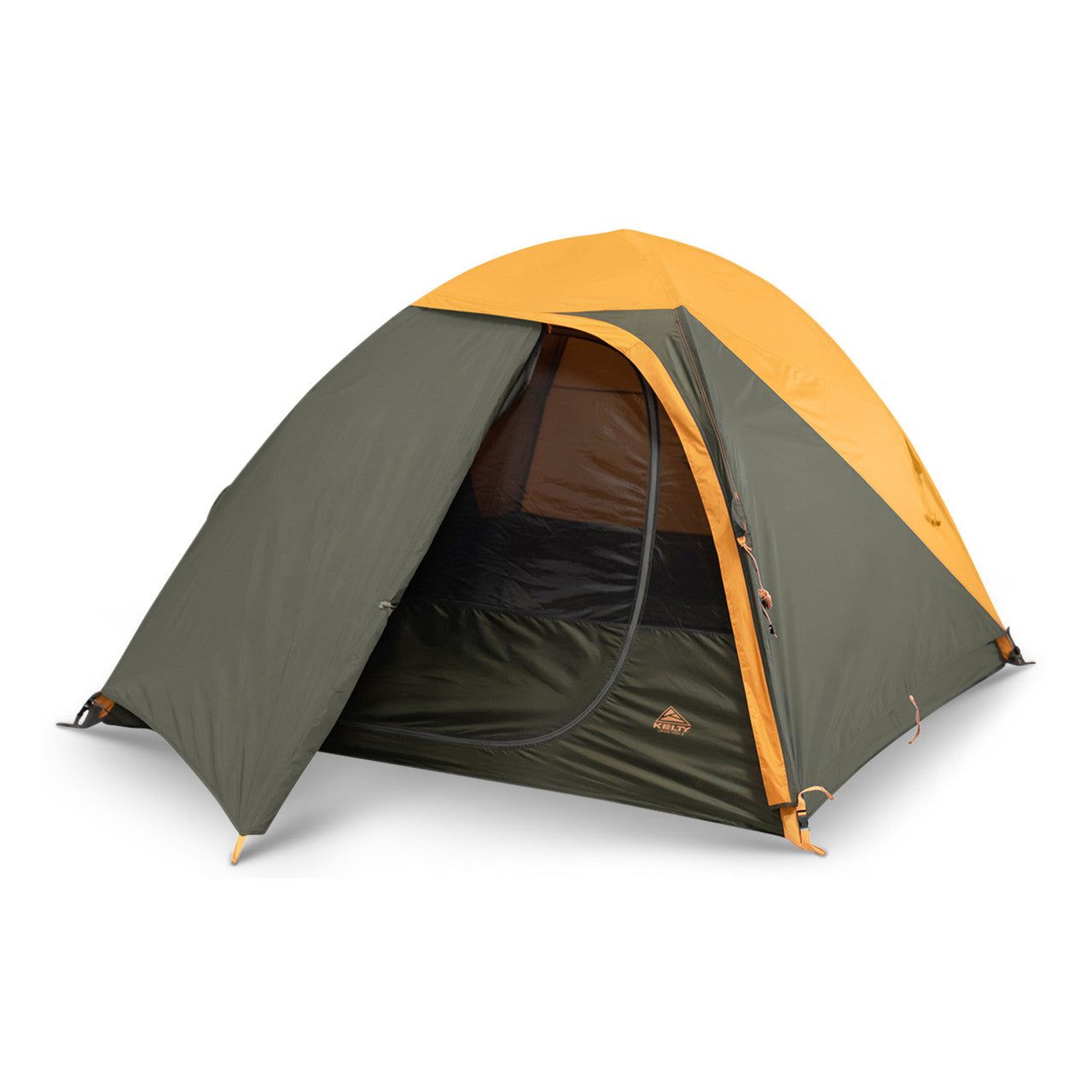
Within our range, the Grand Mesa 4P uses lightweight aluminium poles and Quick Corners, which makes it fast to pitch when the wind is already blowing. The Far Out 2P also has lightweight aluminium poles, and it comes with a footprint and pre-attached guylines in the box. The Late Start 4P has pre-bent poles that give more space inside.
Some family tents, such as the Timeout 6P, use fibreglass poles with pre-attached guylines. That is a fair choice for a sheltered spot, pitched carefully and fully guyed out.
Gear in this guide
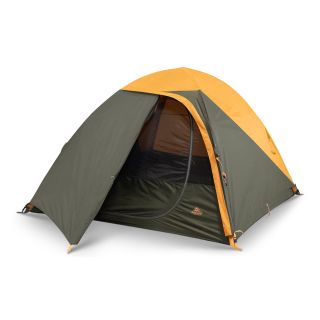 KeltyGrand Mesa 4P TentfromAED 224.95in stock
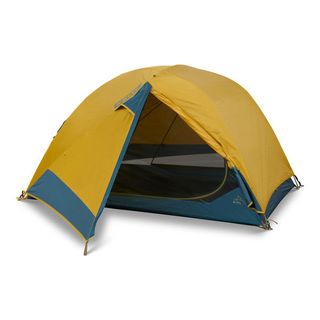 KeltyFar Out 2P TentfromAED 209.95in stock
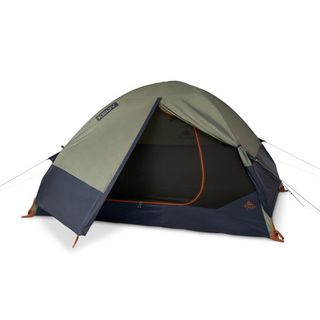 KeltyLate Start 4P TentfromAED 239.95in stock
Shape, height and the rainfly
Height matters, but it is not the whole story. A tall tent with large flat walls gives the wind a big surface to push on. A lower dome usually offers less, but how it behaves also depends on the pole layout, the guy points and which way you face it. A well-guyed taller tent, pitched end-on to the wind, can stand better than a low tent pitched side-on with loose lines.
Look at how the fly is attached. The Ashcroft 3P is a free-standing dome with a full-coverage rainfly, taped seams and pre-attached guylines. For a family, the Discovery Basecamp 4P has an X pole design, a waterproof rainfly and pre-attached guylines for stability in wind. A free-standing tent also keeps its shape while you move it to a better spot, which helps on soft sand.
Gear in this guide
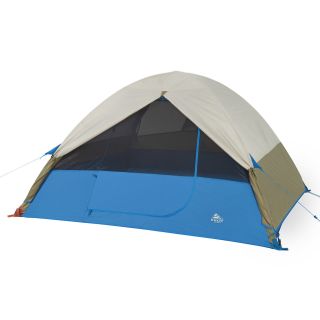 KeltyAshcroft 3P TentfromAED 149.95low stock
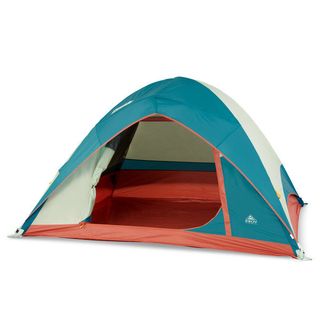 KeltyDiscovery Basecamp 4P TentfromAED 119.95low stock
Anchoring in sand
In loose sand, the stake that came with the tent is often the weakest part of the system. Two things help. The first is weight: a Sand Bag Stake is a triangle-shaped bag that you fill with about 9 kg of sand and tie to a corner or guyline. Buried a little, it holds where a thin stake slides out. The second is a stronger stake for firm ground: Kelty makes the hexagon-shaped NoBendium II from high-strength aluminium, with a long tapered point, for tough ground. In soft sand, weight does the work, not the stake.
Replace old guylines too. The Triptease Lightline is a 15-metre cord with a Dyneema core, made of gold reflective nylon, so you can see the lines with a torch and do not trip over them at night.
Gear in this guide
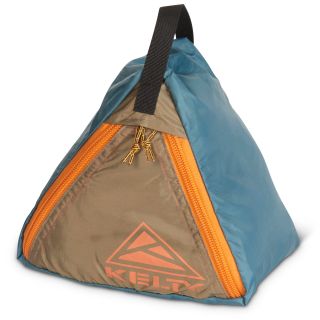 KeltySand Bag StakefromAED 19.95low stock
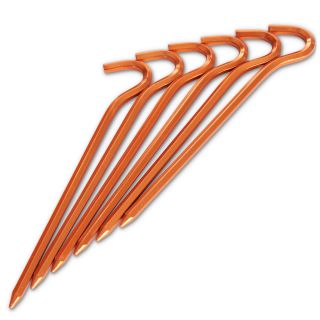 KeltyNoBendium II Stake (6 Pack)fromAED 19.95in stock
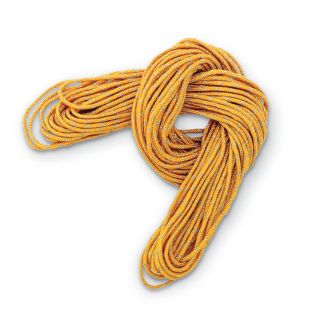 KeltyTriptease LightlinefromAED 24.95in stock
How to pitch so it stays up
- Point the narrow, low end of the tent into the wind, and keep the door on the side away from it.
- A car can break the wind, but only if it stands between the tent and the wind, at a safe distance, and the wind does not swirl around it. Watch which way the sand is moving before you decide.
- Stake the windward corners first, then raise the poles.
- Tie out every guyline before dark, even if the evening is calm. Tightening lines at night in blowing sand is hard.
- Keep the fly tight. A loose fly flaps, and flapping is what breaks poles.
When the wind is stronger than the tent
Do not try to sit it out inside a tent that is bending flat. If the poles are bowing hard and the gusts keep growing, take the tent down or make it safe the way the manufacturer’s instructions describe, and move people to a safer place. Usually that is the car. Park it away from wadi beds and away from the downwind face of a dune, where sand builds up. Pick up loose gear first, so it does not blow away or hit anyone.