
Hajar Mountains: what to carry on a day hike and an overnight trip
Water, packs, poles and rules for the Hajar Mountains: what experienced hikers should carry on a UAE day hike or overnight trip, and why the list is different.
By Outlandia Editors ·
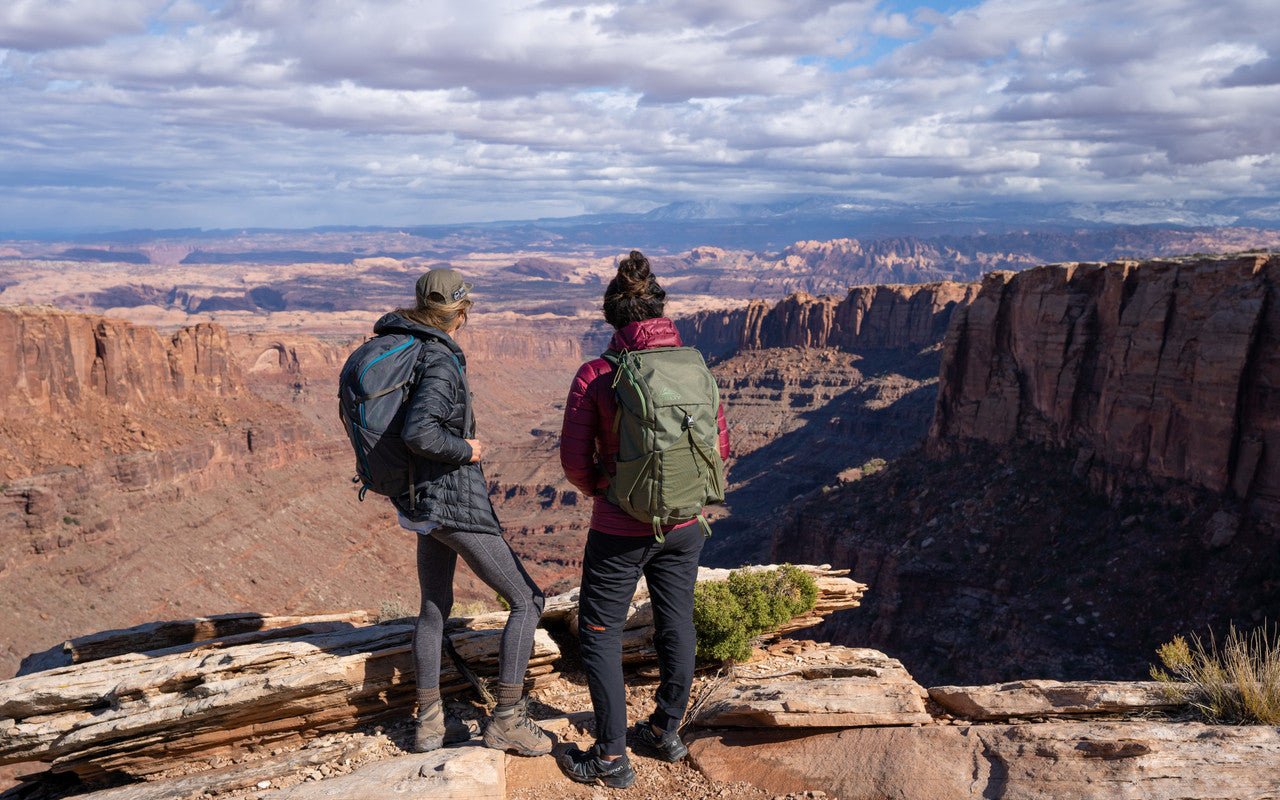
The Hajar Mountains look like familiar hiking country: limestone ridges, wadis and marked trails from Ras Al Khaimah to Fujairah and Hatta. The difference is in what the ground and the climate do to your load. There is almost no water on the trail and little shade, the rock is loose and sharp, and the summits can be cold after dark. Your list from home works with three changes: much more water, sturdier tips on your poles, and a warm layer even on a day that starts hot.
Rules before you leave the car
Rules here belong to a specific trail, operator or site, so check the one you are going to. Rules checked on 6 November 2026:
- Some mountain trails in Fujairah and Ras Al Khaimah ask you to register with a code at the trailhead and record your departure time. At the Fujairah Adventure Centre, groups of 10 or more need a qualified leader (The National).
- One local trekking operator told the same paper that you cannot hike alone. That is an operator’s safety rule, not a national law, but it is good advice on remote routes.
- On Jebel Jais the trails are open to the public and free to walk on your own; guided hikes are an option, not a requirement. Groups larger than 10 should register in advance with the Ras Al Khaimah tourism authority, and hikers are asked to stay on marked trails (Visit Jebel Jais).
Our guide to UAE camping and hiking rules separates what the authorities require from what operators ask.
The day pack
Water decides the size of your pack. The usual guidance here is about a litre for every hour of hiking, and Visit Jebel Jais asks for at least 3 litres per person. Its listed trails include the 7.5 km Wadi Loop, about 3 to 3.5 hours, and the 9.6 km Hidden Oasis Loop for experienced hikers, about 5 to 6 hours. These are guidelines, not a formula: heat, effort and the length of the route all change how much to carry. On a long day that easily means several kilograms of water before anything else.
That is why a 20-litre pack that works for a day in the Alps often feels full here. The Asher 24 has two mesh side pockets for bottles and a front shove-it pocket with compression straps for the layer you take off after the first climb. The Asher 35 is Kelty’s go-to day-hike pack, with a zippered lid pocket and a front trail stash pocket: the right size when the water load is high or you carry for someone else.
- Water by the guidelines above, with more in the car.
- Sun cover: hat, sunglasses, long sleeves.
- A warm layer and a wind shell for the summit or for waiting after dark.
- Headlamp, power bank, first-aid kit and an offline map.
- Stiff-soled shoes: the rock is sharp and much of it moves underfoot.
Day packs
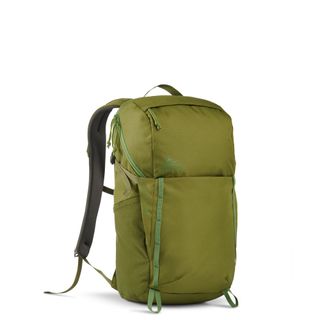 KeltyAsher 24 — Winter MossfromAED 89.95in stock
 KeltyAsher 35 — BelugafromAED 109.95low stock
Packing for an overnight hike
An overnight trip in the Hajar is usually a short distance with a heavy load. You carry water for the evening, the night and the next morning, because there are no reliable springs, plus a tent and a bag for a cold night. Our rough estimate for a winter overnight is 12 to 15 kg, most of it water; yours will differ. Plan where you will sleep before you set off: camping rules in the mountains differ by emirate and by site, so check with the local authority.
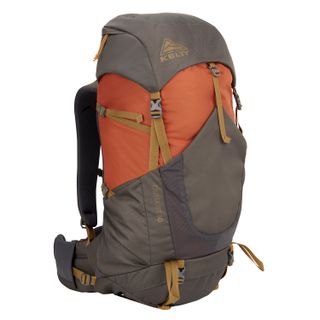
Fit matters more than volume at these weights. The Asher 55 is built for big days on the trail or a night out, with mesh side pockets that keep a bottle within reach. The Outskirt 50 has airmesh shoulder straps and back panel to keep you cooler on the climb, a perimeter frame for stability on uneven ground and a hip-belt pocket for snacks and phone.
For the night itself, our sleeping bag guide for mountain nights covers the sleep system, and the article on one- and two-person tents compares light and roomy options.
Packs for a night out
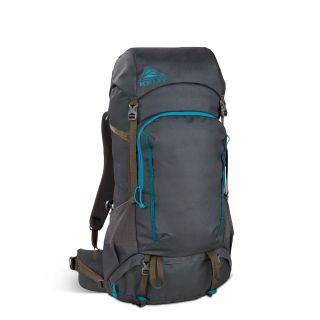 KeltyAsher 55 — BelugafromAED 169.95low stock
- −25%
KeltyOutskirt 50 — GingerbreadfromAED 104.96AED 139.95Out of stock
Poles on loose rock
Hajar trails are steep and covered in loose stones, and descents are where most slips happen. The Upslope 2.0 is a light, compact pair with an easily adjustable length. The Scree poles are built for rugged terrain. Rubber Tips fit over the pole tips for grip on bare rock and come off quickly on gravel. Trekking Baskets stop the tips from sinking into soft ground or slipping between rocks.
Poles and tips
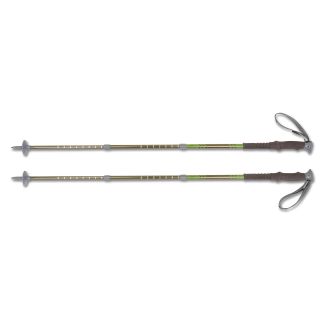 KeltyUpslope 2.0fromAED 49.95in stock
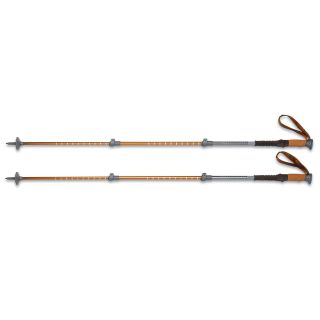 KeltyScreefromAED 69.95in stock
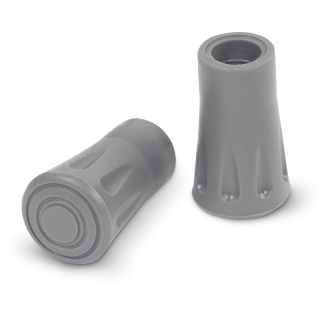 KeltyRubber Tips (Pair)fromAED 4.95in stock
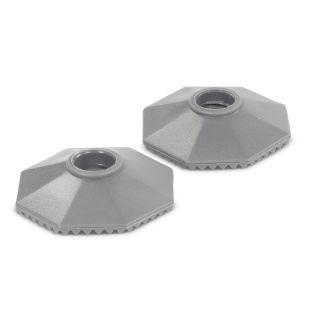 KeltyTrekking Basket (Pair)fromAED 4.95in stock
Before you set off
- Check the forecast for rain across the whole mountain area, not only at the trailhead. Rain higher up can send water down a wadi under a clear sky. If rain is forecast anywhere in the catchment of your route, move the trip. Follow the National Centre of Meteorology’s warnings.
- Check that the area is open: after heavy rain in December 2025, all operations on Jebel Jais were suspended, with a phased reopening (The National).
- Register at the trailhead where a route requires it, and tell someone your route and when to raise the alarm.
- Leave more water in the car than you carry.
- Start at first light. Midday on an exposed ridge is hot even in January.
- Save the emergency number: 999.